
Hotel rooms are named in four ways: by bed (twin, queen, king), by how many people they sleep (single to quad), by layout (studio, suite, connecting) and by tier (standard, deluxe, executive). Learn those four labels and most listings make sense. The catch is that no hotel uses them exactly like the next one, so the bed count and maximum occupancy matter more than the fancy name.
TL;DR
- Rooms are classified by bed configuration, occupancy, layout, and tier or theme.
- Tier names such as standard, superior and deluxe only rank rooms inside one hotel, not across the industry.
- In parts of North America, 'double' can mean a room with two double beds, so always read the bed line.
- Suites separate sleeping from living space. If you only need beds and a place to rest, a king or two-queen room covers most trips.
- Before you book, confirm the bed types, the maximum number of guests and any pet or parking rules.
Table of Contents
- The four ways hotels name their rooms
- Room types by bed
- Room types by occupancy
- Standard, superior, deluxe and executive
- Suites and junior suites
- Other layouts you will see
- How to choose by type of traveler
- A pre-booking checklist
- Our perspective on room types
- Choosing a room at Super 8 in Watertown
- FAQ
- Sources
The four ways hotels name their rooms
When you scroll a booking page you are really reading four different labels stacked together. Hotel industry guides sort room names into bed configuration, occupancy, layout, and tier or theme. A single listing such as 'Deluxe King Suite' mixes a tier (deluxe), a bed (king) and a layout (suite).
Separating the labels is the fastest way to decode a listing:
| Label type | Examples | What it tells you |
|---|---|---|
| Bed configuration | Twin, full, queen, king | Who sleeps comfortably where |
| Occupancy | Single, double, triple, quad | How many guests the room is built for |
| Layout | Studio, suite, connecting, accessible | How the space is arranged |
| Tier or theme | Standard, superior, deluxe, executive | Where the room sits in that hotel's ladder |
The first two tell you whether everyone in your party gets a bed. The last two tell you about comfort and extras, and they are the least reliable between hotels.
Room types by bed
The bed is the most useful fact in any listing, because it decides who sleeps where.
- Twin: two separate single beds. Colleagues traveling together and friends usually want this. Corporate travel books twins constantly because two coworkers sharing a bed is uncommon.
- Full (double) bed: one bed that suits one adult comfortably or two adults who do not mind close quarters.
- Queen: one larger bed for a couple or a solo traveler who wants room to spread out.
- King: the largest standard mattress. It is the usual pick for couples, solo business travelers and anyone who sleeps better with space.
- Two queens: two queen beds in one room. It is the classic choice for families, friends traveling together, hunting parties and work crews.
A related name you may meet is the Hollywood twin. It is two twin beds joined by a common headboard, so the room can be set up as two beds or pushed together.
Why 'double' can be confusing in the US
Outside North America, 'double' usually means one bed for two people. Some US hotel systems still use it differently: in parts of North America, double can mean a room with two double beds, a habit inherited from the roadside motel. A room labeled 'double-double' follows the same logic, meaning two double or queen beds meant for two to four people. If a listing says only 'double', scroll to the bed description before you pay.
Room types by occupancy
Occupancy names describe how many people the room is designed for, not how many beds it has.
| Room | Designed for | Typical beds |
|---|---|---|
| Single | 1 guest | One twin or double bed |
| Double | 2 guests | One double bed or two twin beds |
| Triple | 3 guests | One double and one single bed, or three singles |
| Quad | 4 guests | Usually two double beds |
Those descriptions follow the common definitions used by hotel software providers. Remember that the listed maximum is a hard limit, not a suggestion. Occupancy must follow approved capacity, fire code, layout and property policies, so a room that fits four beds on paper may still cap guests at fewer.
A practical example: a family of four with two teenagers wants two queen beds, not a 'family room' with one bed and a sofa. A crew of three coworkers is usually better in a two-queen room than in a triple that squeezes a single bed in. Counting beds, then people, takes ten seconds and prevents most check-in surprises.
Standard, superior, deluxe and executive
Tier names are where travelers get misled most often. A useful way to read them:
- Standard is the hotel's baseline room. It has the essentials: a bed, a bathroom and basic furnishings.
- Superior is one step up, usually in size, floor or view.
- Deluxe sits above superior, often with better finishes and sometimes a seating area or bathtub.
- Executive is business-oriented, typically with a proper desk and often lounge access.
The important caveat is that these words describe a room's position in one specific hotel's ladder, not an industry grade. A deluxe room in a three-star hotel can be smaller than a standard room in a five-star hotel across the road. Likewise, there is no single worldwide standard room size: two hotels can both sell a 'Standard Room' with different floor areas, beds and bathrooms. For a rough benchmark, one US layout guide puts the average hotel room and bathroom together at about 325 square feet.
The safest comparison is to look at actual room area, bed configuration, floor plan and included features rather than assume that a higher-tier name always means more space.
Suites and junior suites
A suite separates the sleeping area from the living area. In a standard room, both share one open space. In a suite, the bedroom is often divided from the living space by a wall, sometimes with a privacy door, and many suites add a kitchen area with appliances and dining space.
A junior suite is the smallest step up. It is one open room divided by a visual boundary, such as a half wall or rotating console, instead of a solid wall and door. At the top of the scale, a presidential suite is the most luxurious and expensive room in a property, generally one or two per hotel, with one or more bedrooms, a living space and custom services.
The idea of separate sleeping zones is not limited to hotels. A home-style rental such as a four-bedroom vacation rental with a hot tub shows the same principle at a larger scale: private sleeping areas, shared living space and room for a big group under one roof.
Deluxe or suite: which suits you?

The question comes up often. A deluxe room is the better fit when you want a nicer version of one room: better finishes, a seating area, a bigger bed. A suite is the better fit when you need a door between sleeping and living, for example a parent putting a child to bed early, or someone working while a partner sleeps. For longer trips, one family-travel guide notes that a door between sleeping and living areas can matter more than a larger open room. When you compare, look at the separation of space, the kitchen or fridge access, the bed count and the bathroom layout, not only the label.
Other layouts you will see
- Studio: one room that combines sleeping and living space, often with a sofa that converts to a bed.
- Connecting rooms: two separate rooms linked by an internal door. Adjoining or adjacent rooms sit side by side without that door.
- Accessible rooms: designed for guests with mobility needs. Ask the hotel directly about the specific features you require.
- Family rooms and family suites: names vary widely. One family-travel founder points out that a 'family suite' may not mean separate bedrooms or enough individual beds for everyone. It can be a single large room with a sofa bed.
When a label is vague, a call to the front desk settles it faster than guessing.
How to choose by type of traveler
Families
Confirm the exact bedding configuration, maximum occupancy, crib availability and connecting-room policy. Also check whether a sofa bed is included or only available on request. For most families of four, two queen beds is the straightforward answer. Add facilities that burn off energy, such as an indoor pool, and a free breakfast that gets everyone moving without a restaurant stop.
Business travelers
Look for a proper work desk, a comfortable chair, good lighting, sockets near the desk and bed, and a quiet enough room for a video call. Wi-Fi is a working tool, not a nice extra, so the real question is whether it holds up for calls and large files. A king room with a desk and strong Wi-Fi covers most solo business trips.
Crews, drivers and extended-stay guests
For a stay of a week or more, the details shift. You want laundry options, a fridge or microwave if available, a bed per worker, and parking that fits a pickup, trailer or truck. Our guides on weekly hotel stays and extended stay hotel costs walk through rates, taxes and what to confirm. If you travel with a rig, see how to find a truck driver hotel or hotels with RV parking.

Groups
Wedding guests, sports teams and work crews often reserve several rooms of the same type. Read how to book a hotel block so you know how group rates and room counts work before you contact a hotel.
Travelers with pets
Room type matters less than policy here. Ask about pet rules before booking, and see what to check at pet-friendly extended stay hotels.
A pre-booking checklist
Hotels have no universal naming system, so definitions vary by property and country. A complete room description should state maximum occupancy, bed number and size, sofa beds, rollaways, crib availability, approximate room size, whether living and sleeping spaces are separate, bathroom and accessibility features, and included services. Run through this list:
- How many beds, and what sizes?
- What is the maximum number of guests, including children?
- Is there a sofa bed, and is it included or by request?
- How big is the room, and is there a desk or seating area?
- What is included: breakfast, Wi-Fi, parking, pool access?
- What are the pet, cancellation and payment rules? Our guide to hotel cancellation policies explains deadlines and fees.
If the page leaves any of these blank, call the property.
Our perspective on room types
We think the best room type is the one that matches your party, not the longest name on the list. Most of our guests are families, crews, drivers, hunters and business travelers, and they tell us the same thing: they want to know who sleeps where, where the truck goes and what the morning looks like.
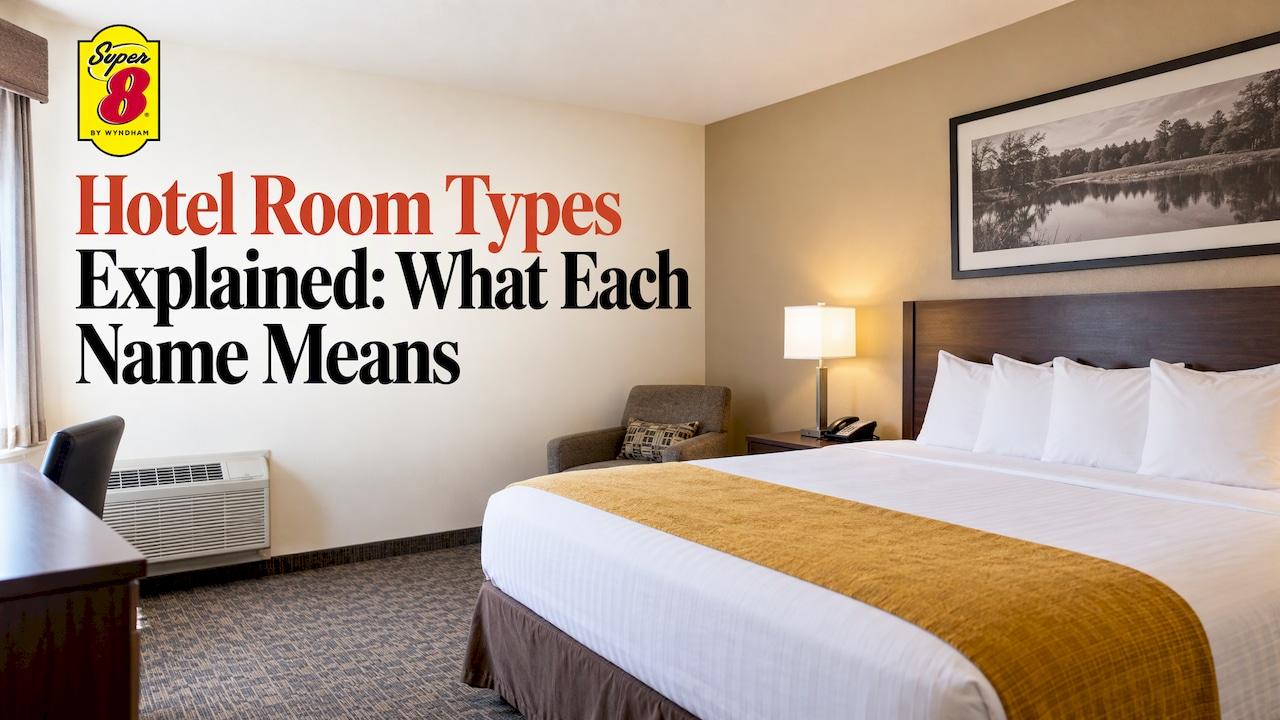
That is why we keep our room choices clear. Our King rooms suit solo travelers, couples and business guests who want space and a good night's sleep. Our Two Queen rooms suit families, friends, hunting parties and work crews who need a bed for everyone. Both come with a 50-inch flat-screen TV and complimentary high-speed Wi-Fi.
Beyond the bed, we focus on what makes a stay easy: a complimentary continental breakfast, an indoor pool and hot tub, pet-friendly rooms, and spacious parking for trucks, pickups, trailers and RVs. For longer assignments we offer flexible weekly accommodations and group booking options.
stayats8llc
Choosing a room at Super 8 in Watertown
At Super 8 by Wyndham Watertown, 503 14th Avenue SE, Watertown, SD 57201, the choice is simple. Pick a King Room for one or two guests, or a Two Queen Beds room for up to a full family or crew. Rooms include complimentary high-speed Wi-Fi and a 50-inch flat-screen TV. Breakfast is complimentary, with a rotating hot and cold selection that includes biscuits and gravy, eggs, sausage and waffles. After the day, the indoor pool and hot tub with LED lighting are ready, and the poolside area has a big movie screen with a 4K projector.
Staying longer? We offer weekly and crew stays, group rates and room for trucks, trailers and RVs. See the rooms and request a group rate on the Super 8 Watertown website.

If the pool is a deciding factor, read about a hotel with a hot tub and pool in Watertown. If breakfast matters, see what to know about free breakfast hotels.
FAQ
What is the difference between a double and a queen room?
A queen is a bed size. 'Double' can mean one double bed, or in some US systems a room with two double beds. Always read the bed description in the listing rather than relying on the word 'double' alone.
What is the difference between a standard room and a deluxe room?
Standard is the hotel's base room with essential furnishings. Deluxe is a step or two above it, often with better finishes and extra seating. These names only rank rooms inside one hotel, so compare size and features rather than the label.
Is a suite worth it?
A suite is worth considering when you need a wall or door between sleeping and living areas, or a kitchen area for a longer trip. For a short stay where you mostly sleep, a well-equipped king or two-queen room is often all you need.
How many people fit in a room with two queen beds?
Two queen beds are generally meant for two to four people, but the hotel's stated maximum occupancy is what counts. It follows fire code and property policy, so confirm it when you book, especially for crews or large families.
What should I check before booking a room for a long stay?
Confirm the bed count for everyone in your party, the weekly rate and taxes, parking for your vehicle, and what is included, such as breakfast and Wi-Fi. Asking the property directly about these details avoids surprises at check-in.
Sources
- Hotel Room Types: Categories and Naming Guide, HotelMinder
- Hotel Room Types Explained, Octorate
- Your complete guide to types of hotel rooms, SiteMinder
- Types of Hotel Rooms: Naming, Categorizing & Pricing, Mews
- Different Types of Hotel Rooms: 25 Types Explained, Myma.ai
- Standard Hotel Room Size, Mingsun Group
- Hotel Room Layout Guide, RoomSketcher
- Hotel Suite Layout: Types, Zones, and Space Planning, RoomMaster
- Types of Hotel Rooms: The Comprehensive Guide, Cvent
- Hotel Room Types: Full Guide, AltexSoft
- 7 hotel booking mistakes when traveling with kids, Yahoo Travel
- How to Choose a Family-Friendly Hotel, Travel Hacker
- How to Choose a Hotel for a Business Trip, Travellizy